Key Takeaways
- Delhi’s ambitious Green Lung Project is transforming city rooftops into vibrant urban farms, addressing both food security and air quality concerns.
- Participants are reporting significant cost savings on produce, improved mental well-being, and a stronger connection to their food sources.
- The project offers a multi-pronged approach, integrating traditional Indian farming techniques with modern hydroponic and aeroponic systems, proving adaptable to diverse urban environments.
- Beyond individual benefits, these urban farms are creating micro-climates, reducing the urban heat island effect, and fostering community engagement across the city.
The Concrete Jungle Awakens: Delhi’s Rooftop Revolution
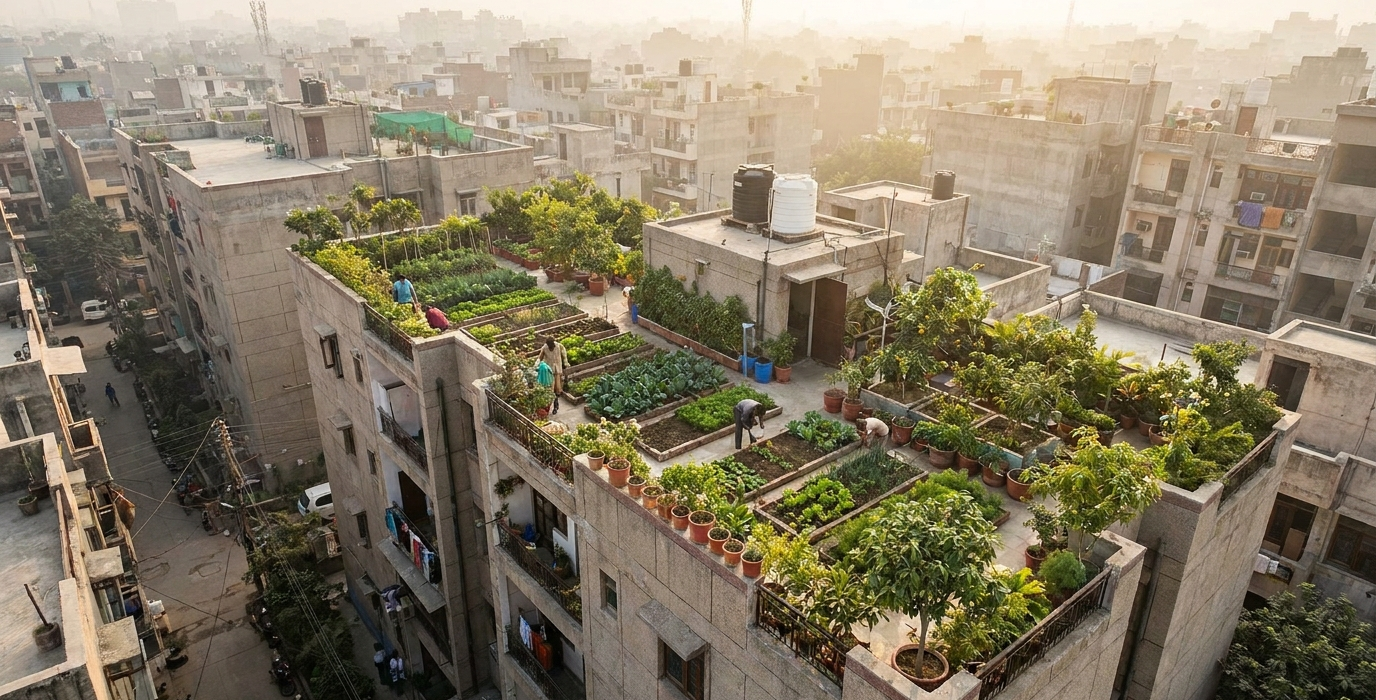
Imagine stepping onto your Delhi rooftop, not to escape the heat, but to harvest fresh tomatoes for your evening meal. This isn’t a distant dream; it’s the burgeoning reality of Delhi’s Green Lung Project. Launched in early 2026, this visionary initiative is rapidly transforming the city’s vast, often underutilised, rooftop spaces into thriving hubs of urban agriculture. We’re talking about more than just a few potted plants; we’re witnessing a full-fledged revolution in how Delhiers access and grow their food.
The project’s primary goal is to combat the city’s persistent air pollution crisis. By greening millions of square feet of concrete, these rooftop farms act as vital ‘green lungs,’ absorbing carbon dioxide and releasing oxygen. But the benefits extend far beyond air quality. Participants are reporting a dramatic reduction in their grocery bills, a newfound connection to nature amidst the urban sprawl, and a sense of empowerment in growing their own nutritious food. This is a ground-up movement, driven by residents eager to make a tangible difference in their lives and their city.
The sheer scale of the undertaking is impressive. The Delhi government, in collaboration with agricultural experts and community organisations, has provided training, resources, and subsidies to encourage widespread adoption. From bustling markets of Chandni Chowk to the residential towers of Dwarka, the green patches are spreading. We’ve seen entire apartment complexes come together, pooling resources and knowledge to create communal farming spaces that benefit all residents. It’s a testament to collective action and a shared vision for a healthier, more sustainable Delhi.
Beyond the Balcony: Diverse Farming Techniques Take Root
The Green Lung Project isn’t a one-size-fits-all solution. It actively promotes a diverse range of farming techniques, catering to different spaces, skill levels, and produce preferences. Traditional Indian methods, like raised beds and composting, are being revitalised alongside cutting-edge hydroponic and aeroponic systems. This blend ensures that even the smallest balcony can become a productive micro-farm, while larger terraces can support more ambitious ventures.
For those with limited space, hydroponics – growing plants in nutrient-rich water – is proving incredibly popular. Systems like the Nutrient Film Technique (NFT) and Deep Water Culture (DWC) are being adapted for rooftop use, allowing for high yields of leafy greens and herbs with minimal soil. These systems often require less water than traditional methods, a crucial advantage in a city like Delhi. We’ve seen innovative setups in areas like Lajpat Nagar, where residents are growing an abundance of spinach, methi, and coriander.
Complementing these modern approaches are the revived traditional techniques. Many participants are embracing organic composting, turning kitchen waste into nutrient-rich fertiliser for their soil-based gardens. This not only reduces landfill waste but also provides the perfect food for plants grown in raised beds or pots. In areas with more space, like parts of South Delhi, we’re seeing larger communal gardens emerge, complete with small-scale greenhouses and rainwater harvesting systems. The project has also seen a resurgence in interest in vertical farming, using tiered structures to maximise growing space on walls and fences, a smart adaptation for dense urban living.
Economic Harvests: Saving Pennies, Gaining Produce
One of the most immediate and tangible benefits of participating in the Green Lung Project is the significant impact on household budgets. For many Delhi families, especially those in middle and lower-income brackets, the rising cost of fresh produce has been a growing concern. The ability to grow a substantial portion of their own vegetables, herbs, and even some fruits, translates directly into savings.
Take, for instance, the Sharma family in Rohini. Before joining the project, they spent an average of ₹4,000 per month on vegetables alone. Since establishing their rooftop farm two years ago, that cost has plummeted to less than ₹1,000, with the rest of their needs being met by their own harvest. They’ve become so proficient that they often share surplus produce with neighbours, fostering a spirit of community generosity. This economic uplift is not an isolated incident; similar stories are emerging across the city.
The project’s economic ripple effect extends beyond individual households. Local nurseries and gardening supply stores have reported a surge in demand for seeds, organic fertilisers, and small-scale farming equipment. Furthermore, the initiative is spurring the growth of small, community-based enterprises focused on selling excess produce or offering urban farming consultation services. We’re seeing young entrepreneurs in areas like Shahdara setting up stalls selling their rooftop-grown organic greens, creating new avenues for income and local economic development. This isn’t just about growing food; it’s about cultivating economic resilience.
A Breath of Fresh Air: Combating Pollution, One Leaf at a Time
The most compelling justification for the Green Lung Project is its direct impact on Delhi’s notoriously poor air quality. As the city grapples with smog and pollution levels that often exceed safe limits, these green spaces offer a much-needed antidote. Plants, through photosynthesis, absorb carbon dioxide and release oxygen, effectively filtering the air.
Scientific studies conducted by the Indian Institute of Tropical Meteorology (IITM) have begun to show promising results. Early data from monitoring stations located near larger rooftop farm clusters in areas like Dwarka and Vasant Kunj indicate a localised reduction in particulate matter (PM2.5) by up to 15% during peak growing seasons. While this might seem modest, imagine the cumulative effect if the project reaches its full potential across the entire city. These farms are acting as miniature air purifiers, working tirelessly to make Delhi’s air more breathable.
Beyond direct air filtration, the green canopy created by these farms helps to mitigate the urban heat island effect. Dark, impermeable surfaces like concrete and asphalt absorb and retain heat, making cities significantly warmer than surrounding rural areas. By replacing these surfaces with vegetation, the temperature on and around these rooftops can be lowered by several degrees Celsius. This not only makes living spaces more comfortable but also reduces the energy demand for cooling, further contributing to a greener footprint. The visual transformation is also profound, turning drab concrete landscapes into vibrant, living ecosystems.
Nourishing the Mind and Body: Health and Well-being Flourish
The Green Lung Project is proving to be more than just an agricultural or environmental initiative; it’s a powerful catalyst for improved physical and mental well-being. The act of gardening itself is inherently therapeutic. Engaging with nature, even in an urban setting, has been shown to reduce stress, anxiety, and depression. For many Delhi residents, often living in cramped apartments and facing the daily grind, their rooftop gardens have become sanctuaries of peace and rejuvenation.
Participants frequently report a significant boost in their mood and energy levels. The physical activity involved in planting, watering, and harvesting provides a gentle form of exercise, contributing to better physical health. Moreover, the food produced is often fresher, more nutritious, and free from harmful pesticides, leading to healthier diets. Imagine the satisfaction of preparing a meal with vegetables you’ve grown yourself, knowing exactly what went into them. This direct connection to one’s food fosters a greater appreciation for healthy eating habits.
The sense of accomplishment and purpose derived from nurturing plants and seeing them flourish is incredibly rewarding. It provides a tangible outcome for one’s efforts, a contrast to the often abstract nature of modern work. Community gardens, in particular, foster social interaction and a sense of belonging, combating the isolation that can be prevalent in large cities. We’ve heard heartwarming stories of elderly residents finding renewed purpose in sharing their gardening knowledge with younger generations on communal rooftops, bridging generational divides and building stronger communities.
Surprising Facts and Future Horizons
As the Green Lung Project matures, some truly fascinating insights are emerging. One surprising fact is the significant increase in local biodiversity observed on rooftops that have embraced diverse planting. Ornithologists have noted a rise in sightings of various bird species, including migratory ones, attracted by the new food sources and habitats. Even insect populations, crucial for pollination, are showing a healthy resurgence in these green oases. This demonstrates how even small-scale urban greening can have a cascading positive effect on the local ecosystem.
Another unexpected benefit is the reduction in stormwater runoff. The absorbent nature of soil and plants on rooftops helps to soak up rainwater, alleviating the burden on the city’s drainage systems, especially during the monsoon season. This can help mitigate urban flooding, a problem that plagues many Indian cities. The project is also inadvertently becoming an educational hub. Schools are organising field trips to rooftop farms, teaching children about sustainable agriculture, environmental responsibility, and where their food comes from. This hands-on learning is invaluable for instilling a sense of environmental stewardship in the next generation.
Looking ahead, the vision for the Green Lung Project is even more ambitious. Plans are underway to integrate these farms with local restaurants and food delivery services, creating a true farm-to-table ecosystem within the city. There’s also discussion about developing a dedicated app that connects rooftop farmers with consumers, allowing for direct sales and reducing food miles. The potential for scaling up, perhaps even integrating vertical farming into the facades of buildings, is immense. Delhi is not just growing food; it’s cultivating a blueprint for a greener, healthier, and more resilient urban future for cities worldwide.
| Farming Method | Space Requirement | Water Usage | Initial Setup Cost (Estimated) | Yield Potential | Best Suited For |
|---|---|---|---|---|---|
| Traditional Soil-Based (Raised Beds/Pots) | Medium to Large | Moderate | ₹1,500 – ₹5,000 | Moderate | Home gardens, larger terraces, community plots |
| Hydroponics (NFT/DWC) | Small to Medium | Low | ₹5,000 – ₹15,000+ | High (especially for leafy greens) | Balconies, smaller terraces, controlled environments |
| Aeroponics | Small | Very Low | ₹8,000 – ₹20,000+ | Very High | Limited space, advanced users seeking maximum efficiency |
| Vertical Farming | Very Small (Vertical Space) | Low to Moderate | ₹3,000 – ₹10,000+ (per module) | High (densely packed) | Walls, fences, limited horizontal space |
“The most profound change isn’t just in the food we eat or the air we breathe, but in the renewed sense of connection we feel – to the earth, to our neighbours, and to the future we are actively building, one rooftop at a time.”
Frequently Asked Questions
What are the basic requirements to start a rooftop garden in Delhi?
You’ll need a structurally sound rooftop, access to sunlight (at least 6-8 hours per day for most vegetables), a water source, and basic gardening tools. For hydroponic or aeroponic systems, you’ll also need the specific equipment. Permits might be required depending on your building’s regulations, so it’s wise to check with your RWA (Resident Welfare Association).
How much can I realistically save on my grocery bills?
Savings vary based on your current consumption and the scale of your garden. However, many participants report saving 30-70% on their monthly vegetable and herb expenses. This is especially true if you grow high-demand items like tomatoes, chilies, and leafy greens which can be costly in the market.
Is it difficult to maintain a rooftop farm, especially during peak summer or monsoon?
Rooftop farming requires consistent effort, but the techniques are manageable. During peak summer, you’ll need to ensure adequate watering and perhaps provide some shade. In the monsoon, good drainage is crucial to prevent waterlogging. Hydroponic and aeroponic systems can offer more control over these conditions. Many find the daily check-ins a calming routine.
Can I grow fruits on my Delhi rooftop?
Yes, you can! While leafy greens and vegetables are easier to start with, many fruits can be grown successfully. Dwarf varieties of citrus fruits (like lemons and limes), guavas, papayas, and even strawberries do well in pots or raised beds on rooftops. Success depends on sunlight, proper soil, and good care. Some participants have even managed small passion fruit vines.