Key Takeaways
- India’s diverse entomophagy traditions are poised for a modern revival, driven by sustainability and nutritional needs.
- Specific insects like crickets and mealworms offer a protein-rich, low-impact alternative to conventional livestock.
- Navigating regulatory hurdles and overcoming consumer perception are key challenges for widespread adoption.
- The market for edible insects in India is projected for significant growth, with opportunities in food products and supplements.
The Buzz About Bugs: A New Protein Frontier for India
The idea might make you squirm, but the reality is, eating insects is far from a new phenomenon. For centuries, communities across India, from the tribal heartlands of Odisha to the hills of Himachal Pradesh, have incorporated insects into their diets. These aren’t just snacks; they’re traditional, nutritious, and, as we’re increasingly discovering, remarkably sustainable sources of protein. Today, as India grapples with feeding a burgeoning population and the environmental strain of conventional agriculture, these age-old practices are being re-examined with fresh eyes. We’re talking about a potential protein revolution, one that’s buzzing with opportunity and backed by science.
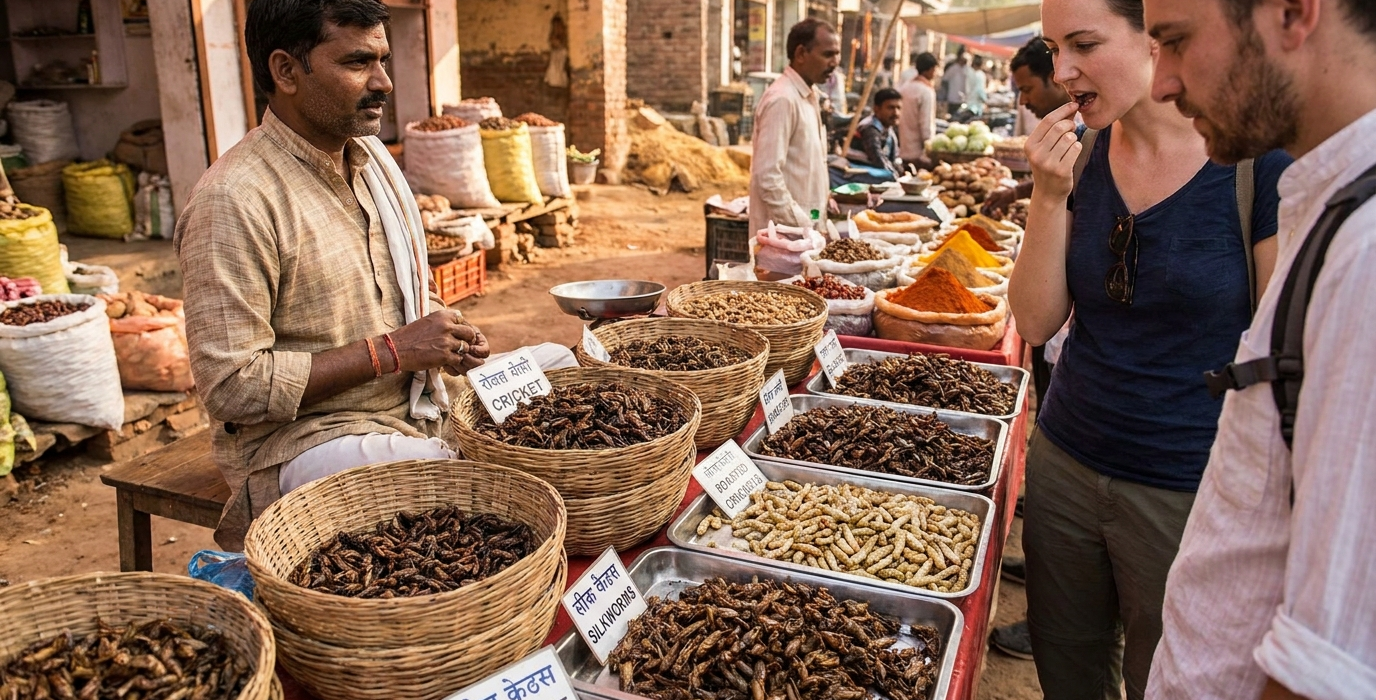
The shift towards entomophagy, the practice of eating insects, is gaining global momentum. But for India, it carries a unique resonance, connecting modern innovation with ancient wisdom. The sheer diversity of edible insect species found across the subcontinent is astounding. Think of the roasted grasshoppers savoured in Manipur or the silkworm pupae popular in Nagaland. These aren’t niche delicacies; for many, they represent readily available, protein-dense food sources, especially in rural economies. As we look towards 2026 and beyond, the conversation around sustainable food systems places insects squarely in the spotlight.
Nutritional Powerhouses in Miniature
When we talk about protein, conventional sources like chicken, mutton, and fish often come to mind. However, many edible insects pack a nutritional punch that rivals, and in some cases surpasses, these familiar options. Crickets, for instance, are a complete protein source, containing all nine essential amino acids our bodies need. They are also rich in iron, zinc, and B vitamins. Mealworms, another commonly farmed insect, are high in healthy fats and fibre, alongside significant protein content. This makes them an incredibly efficient way to meet daily dietary requirements.
Consider the protein content per 100 grams: while chicken breast typically offers around 31 grams of protein, dried cricket powder can boast upwards of 60-70 grams. This is a staggering difference, especially when you factor in the land, water, and feed required to produce that protein. Insects require a fraction of the resources. Furthermore, the bioavailability of nutrients in insects is often high, meaning our bodies can absorb and utilise them effectively. For a nation like India, where protein deficiency remains a concern in certain demographics, insects offer a compelling, accessible solution.
The Sustainability Edge
The environmental benefits of insect farming are perhaps its most compelling selling point in the climate-conscious era of 2026. Traditional livestock farming, particularly cattle and pigs, is a significant contributor to greenhouse gas emissions, deforestation, and water pollution. Insects, on the other hand, have a dramatically smaller ecological footprint. They require significantly less land and water. For example, producing one kilogram of beef can require thousands of litres of water, whereas producing one kilogram of insect protein might use only a few hundred.
Furthermore, insects are highly efficient converters of feed. They can be raised on organic waste streams, such as food scraps and agricultural by-products, effectively diverting waste from landfills and turning it into valuable nutrition. This circular economy approach is precisely what our food systems need to become more resilient and sustainable. The implications for India, with its vast agricultural sector and substantial food waste challenges, are immense. Imagine farms in states like Punjab or Haryana utilising crop residues to feed insect farms, creating a symbiotic relationship.
Navigating the Regulatory and Consumer Landscape
Despite the inherent benefits, the widespread adoption of edible insects in India faces two primary hurdles: regulation and consumer perception. While traditional consumption exists, formal farming, processing, and sale of insects for mass consumption are still in nascent stages of regulatory development. The Food Safety and Standards Authority of India (FSSAI) has begun to provide guidelines, but a comprehensive framework is crucial to ensure safety, quality, and consumer trust. Clear standards for farming, hygiene, processing, and labelling are essential.
Consumer acceptance is another significant challenge, often termed the “ick factor.” For many in urban India, the idea of eating insects is unfamiliar and unappealing, despite their historical presence in some regional cuisines. Overcoming this requires a multi-pronged approach. Education about the nutritional and environmental benefits is key. Innovative product development, where insects are processed into flours, powders, or incorporated into familiar foods like snacks, pasta, or protein bars, can help mask their appearance and introduce them subtly. Think of cricket flour blended into atta for rotis, or mealworm crisps seasoned with Indian spices.
The Rise of Insect-Based Products
The global market for edible insects is already experiencing substantial growth, and India is poised to become a significant player. By 2026, we’re seeing more entrepreneurs and researchers exploring this space. Companies are emerging that focus on insect farming, processing, and developing consumer-ready products. These businesses are often driven by a passion for sustainability and a belief in the future of food. They are experimenting with different insect species, cultivation methods, and flavour profiles to cater to diverse palates.
Insects are being transformed into nutrient-dense flours and powders, which can be easily incorporated into everyday meals and snacks. This approach makes them accessible to a broader audience, bypassing the visual aversion some may have. Imagine cricket protein bars marketed as post-workout fuel, or mealworm-based snacks seasoned with chaat masala, offering a familiar taste with an unexpected, sustainable ingredient. The potential applications are vast, ranging from pet food and animal feed to high-protein supplements and even gourmet culinary creations.
A Surprising Historical Footprint in India
It’s easy to dismiss entomophagy as a fringe practice or a recent Western trend, but its roots in India run deep and are surprisingly diverse. Historical texts and anthropological studies reveal a rich tapestry of insect consumption across various regions and communities. For instance, in the arid regions of Rajasthan, particularly among communities like the Bishnoi, certain types of locusts and beetles have been traditionally harvested and consumed. These were not just for sustenance but were also economically important, providing a source of income through their collection and sale.
Another fascinating historical practice comes from the Eastern Ghats, where tribal communities have long consumed ant eggs and larvae. These nutrient-rich morsels are often referred to as “desi caviar” and are prepared in various ways, often fried with local spices. This highlights not only the nutritional value but also the culinary ingenuity involved in incorporating insects into local diets. A surprising fact is that the practice was so ingrained in certain areas that specific harvesting seasons for insects were observed, much like for fruits or grains, demonstrating their agricultural significance.
Case Study: Gujarat’s Insect Initiatives
While many regions have historical ties to entomophagy, Gujarat is emerging as a state actively exploring the commercialisation and promotion of edible insects. Research institutions and agricultural universities in Gujarat are investigating the feasibility of large-scale insect farming, focusing on species like the black soldier fly and mealworms. These initiatives aim to develop sustainable protein sources for animal feed initially, with a long-term vision for human consumption. The state’s proactive approach to agricultural innovation makes it a prime candidate for leading this new food sector.
The focus in Gujarat is often on creating closed-loop systems where insects can be used to process organic waste, thereby reducing environmental pollution and generating valuable by-products like insect frass (excrement), which is an excellent organic fertiliser. This integrated approach underscores the potential of insect farming to address multiple societal and environmental challenges simultaneously. The lessons learned from these pilot projects are invaluable for scaling up insect-based protein production across India.
The Future of Protein: A Comparative Look
As we look ahead to the nutritional landscape of 2030 and beyond, the choices we make about our protein sources will be critical. The sustainability of traditional livestock is increasingly questioned, leading to a surge in interest for alternatives. Edible insects stand out as a remarkably efficient and environmentally sound option. Let’s consider a simplified comparison of protein production efficiency.
| Protein Source | Feed Conversion Ratio (kg feed per kg product) | Water Usage (litres per kg product) | Land Usage (sq m per kg product) | Greenhouse Gas Emissions (kg CO2eq per kg product) |
|---|---|---|---|---|
| Beef | 10-25 | 15,000+ | 100+ | 60+ |
| Chicken | 2-3 | 4,300+ | 5-10 | 6.9 |
| Crickets | 1.7 | ~100 | ~1 | ~1 |
| Mealworms | 2.1 | ~150 | ~1.5 | ~1.2 |
Note: Figures are approximate and can vary based on farming practices and specific species.
This table clearly illustrates the significant advantages of insect farming. The feed conversion ratio for insects is far superior, meaning they need less food to produce the same amount of protein. Their water and land footprint is minuscule compared to conventional livestock. Even when compared to poultry, a more efficient meat source, insects offer substantial environmental benefits. This makes them an attractive proposition for a resource-constrained country like India.
“The future of food isn’t just about what we eat, but how sustainably we can produce it. Edible insects offer a powerful, often overlooked, answer to this global challenge, and India, with its rich culinary history and innovative spirit, is perfectly positioned to lead this transition.”
Challenges and Opportunities Ahead
The path to integrating edible insects into India’s mainstream diet is not without its challenges. Beyond regulatory frameworks and consumer acceptance, there’s the need for scaled-up, efficient farming infrastructure. Developing cost-effective breeding and processing technologies will be crucial. Furthermore, ensuring the ethical treatment of insects and maintaining high standards of biosecurity in farming operations are paramount. The potential for zoonotic disease transmission, though lower than with mammals, must also be rigorously assessed and managed.
However, the opportunities are equally vast. The market for insect-derived protein is projected to grow exponentially. This presents a chance for economic development, particularly in rural areas where insect farming can provide new livelihoods. It also offers a solution to malnutrition and food insecurity. For entrepreneurs, this is a burgeoning sector ripe for innovation, from developing new food products to creating sustainable feed solutions for aquaculture and poultry. As we move towards 2026 and beyond, the humble insect is set to play a much larger role in our food systems.
Frequently Asked Questions
What are the main types of insects eaten in India?
Historically, communities across India have consumed a wide variety, including grasshoppers, locusts, crickets, various beetle larvae, ant eggs, and silkworm pupae. Modern farming is often focusing on crickets and mealworms for their efficiency and nutritional profile.
Is insect farming environmentally friendly?
Yes, insect farming is significantly more environmentally friendly than traditional livestock farming. It requires far less land, water, and feed, and produces substantially lower greenhouse gas emissions.
Are there health risks associated with eating insects?
When farmed and processed under hygienic conditions and consumed by individuals without specific allergies, edible insects are generally safe and highly nutritious. Regulatory oversight is crucial to ensure food safety standards are met.
How can I try edible insects in India?
Currently, finding readily available insect-based products can be challenging, but some specialty stores and online retailers are starting to offer them. Look for cricket powder, protein bars, or seasoned insect snacks. Participating in food festivals or workshops that explore entomophagy can also be a good way to experience them.
What is the future outlook for the edible insect market in India?
The outlook is very positive. Driven by increasing awareness of sustainability and the demand for alternative protein sources, the market is expected to grow significantly in the coming years, with potential for widespread adoption in both food products and animal feed.