The scent of the sea, crisp and invigorating, often conjures images of Norway’s rugged coastlines. But increasingly, that scent, carried by air and sea, has been wafting into Indian kitchens, thanks to the prized Norwegian salmon. For years, this premium fish has been a darling of Indian gourmands, gracing the menus of fine dining establishments and appearing on the plates of those seeking a taste of the exotic. Yet, a recent shift in Indian trade policy has cast a shadow over this burgeoning culinary romance, raising questions about the future of this lucrative export.
Key Takeaways:
- India has recently increased import tariffs on certain Norwegian seafood products, including salmon.
- This move could significantly impact the cost and availability of Norwegian salmon for Indian consumers and businesses.
- Norwegian exporters are exploring alternative markets and strategies to mitigate the financial blow.
- Indian businesses reliant on salmon imports are facing increased operational costs and may seek domestic alternatives.
- The long-term implications for India-Norway trade relations and the broader Indian seafood market are yet to unfold.
A Taste of the Fjords in a Developing Market
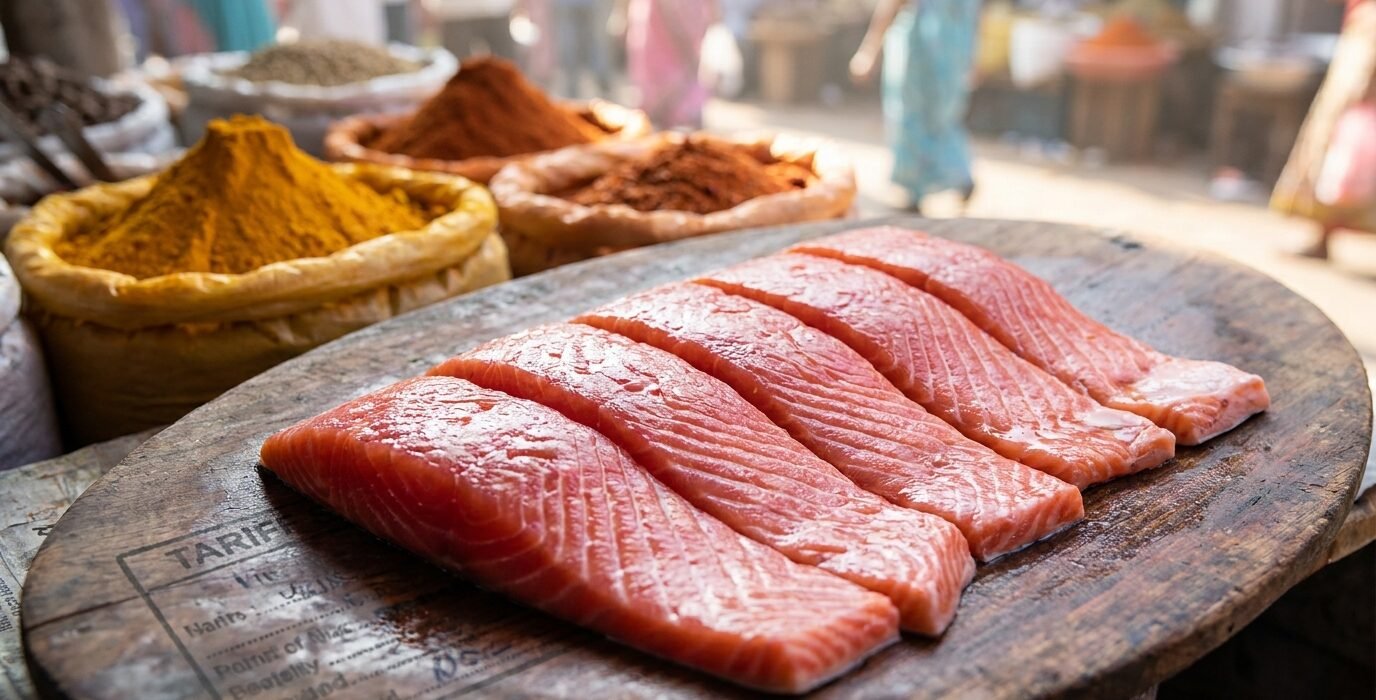
Imagine a bustling Mumbai fish market. A kaleidoscope of colours. A symphony of calls. Now, picture a prized, glistening salmon fillet, flown in from the icy, pristine waters of Norway. This wasn’t a common sight a decade ago.
The story of Norwegian salmon’s ascent in India is one of aspiration and evolving palates. As India’s economy grew, a burgeoning middle class developed a taste for international cuisine. Demand for premium ingredients like salmon surged. Norwegian exporters, with their reputation for quality and sustainable aquaculture, were perfectly positioned.
The journey of a Norwegian salmon from the fjords of Bergen to a platter in Delhi is a marvel of modern logistics. It involves meticulous farming practices. Rapid processing. An intricate cold chain to preserve freshness. Companies like Mowi and Grieg Seafood have invested heavily. They understood India’s potential as a significant market.
The tariff increases represent a disruption. A well-oiled machine has been carefully constructed over years of effort and investment. It’s not just about a fish. It’s about a carefully curated culinary experience. This experience is now facing an unexpected hurdle. We’re talking about a market that was just beginning to truly embrace this sophisticated protein.
The Unforeseen Tariff Storm
The Indian government’s decision to raise tariffs on a range of imported goods has sent ripples of concern through the industry. Certain seafood categories from Norway are included. While the exact figures and product classifications can be complex, the general impact is clear. The cost of bringing Norwegian salmon into India has become significantly higher.
This isn’t a minor adjustment. It’s a substantial increase. It directly affects the landed cost of the product. For Norwegian producers, this means a squeeze on profit margins. They can absorb the cost. Or, they can significantly increase prices for their Indian customers.
The rationale behind such tariff hikes often stems from a desire to protect domestic industries. Or, to address trade imbalances. However, in the case of premium seafood like Norwegian salmon, the direct impact on domestic production is less pronounced. India does have its own aquaculture. But the scale, variety, and quality of salmon produced domestically do not directly compete. This suggests the tariff increase might be part of a broader policy. Or, perhaps a response to specific trade negotiations or geopolitical considerations. We need to understand the nuances of these policy decisions. This will help us fully grasp the implications.
When Taste Buds Meet Trade Barriers
The immediate consequence of higher tariffs is a direct impact on price. For the Indian consumer who has come to savour salmon in their sushi, sashimi, or pan-seared preparations, this means paying more for their favourite delicacy. This could lead to a reduction in demand. Especially among those who were just beginning to incorporate salmon into their regular diets.
Restaurants, especially those in the fine-dining segment, are also feeling the pinch. Their food costs will inevitably rise. This forces them to either absorb the difference. This reduces profitability. Or, they must pass the increased cost onto their diners. This could alienate some of their customer base.
Consider a high-end restaurant in Bengaluru. It’s known for its innovative seafood dishes. They likely have a significant portion of their menu dedicated to salmon. This salmon is sourced from Norway. A sudden tariff hike could force them to rethink their entire menu strategy. Perhaps they’ll reduce salmon portion sizes. Or increase prices. They might even remove popular salmon dishes altogether.
This isn’t just about economics. It’s about culinary creativity. The dining experience is being curtailed by trade policy. The joy of discovering new flavours. Or indulging in familiar favourites. It’s now tinged with the bitterness of increased costs.
Navigating the Currents: Norwegian Exporters’ Response
For Norwegian salmon exporters, this tariff increase is a significant challenge. But it’s not necessarily an insurmountable one. These companies are experienced players. They operate in the global seafood market. They are accustomed to navigating various trade regulations and market fluctuations. Their immediate reaction typically involves a multi-pronged approach.
Firstly, they will be in constant dialogue. They will speak with their Indian importers and distributors. They need to understand the full scope of the tariff changes. And their impact. Secondly, they will likely explore options to absorb some of the cost themselves. This is especially true if they believe the tariff is a temporary measure. Or if they value the long-term potential of the Indian market.
Beyond that, diversification becomes crucial. Norwegian producers have a vast global network. If the Indian market becomes less profitable, they will naturally look elsewhere. They’ll strengthen their presence in other growing markets. Think Southeast Asia, the Middle East, or even within Europe itself. They might also focus on offering different product formats. Or value-added products. These might be subject to different tariff rates. Or they might offer higher margins. This helps compensate for increased costs.
This resilience is a hallmark of established industries. They don’t just wait for the storm to pass. They learn to sail through it. The Norwegian salmon industry, with its roots in a challenging environment, understands the importance of adaptability.
The Indian Seafood Landscape: A Shift in Tides?
From an Indian perspective, the tariff hike on Norwegian salmon could spur a re-evaluation. This re-evaluation concerns domestic seafood production and consumption patterns. While direct competition is limited, the increased cost of imported salmon might indirectly encourage a greater focus on locally sourced fish. This could benefit Indian aquaculture farmers and fishermen. It could potentially lead to increased investment and innovation in the domestic seafood sector.
Furthermore, Indian consumers, faced with pricier imported salmon, might become more open to exploring other types of fish. These fish are readily available and more affordable. This could be a catalyst for greater promotion of indigenous fish varieties. Many of these are highly nutritious and delicious. Think of the diverse offerings from India’s coastlines. Pomfret, kingfish, mackerel, and a myriad of other species. The narrative could shift. It could move from “I want Norwegian salmon” to “What are the best local seafood options available?” This change in consumer preference, driven by economic factors, could ultimately lead to a more robust and diversified Indian seafood market. It would be less reliant on imports for premium products. It’s a fascinating interplay between global trade and local culinary traditions.
A Complex Equation: Beyond the Price Tag
The impact of these tariffs extends beyond mere economics. It touches upon consumer choice. It affects industry sustainability. And it impacts the delicate balance of international trade relations. For Norway, a nation deeply intertwined with its maritime resources, maintaining access to key global markets is paramount. The salmon industry is a significant contributor to its economy. Disruptions in a market as large and growing as India cannot be ignored.
For India, the decision reflects a broader economic strategy. This strategy seeks to foster domestic growth. It also aims to manage its international trade commitments. The future of Norwegian salmon in India will depend on several factors. Will the tariffs be a temporary measure? Perhaps linked to ongoing trade negotiations. Or will they be a more permanent policy shift? How will Norwegian exporters adapt their strategies? And crucially, how will Indian consumers and businesses respond to the increased costs? The story is still unfolding. It’s a complex equation with many variables. It’s a reminder that even seemingly simple trade policies can have far-reaching and nuanced consequences. They affect everything from the price of a meal to the economic health of nations. The journey of the Norwegian salmon, once a smooth sail into the Indian market, now faces choppier waters.